


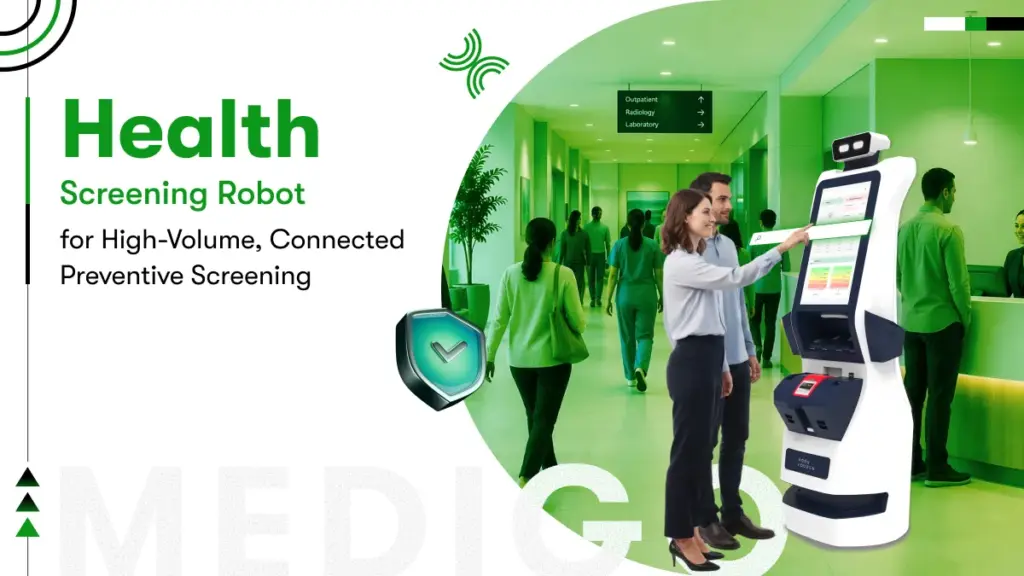
A health screening robot is setting a new standard for preventive care across hospitals, diagnostic centers, corporate campuses, transport hubs, defence environments, and large industrial sites where screening demand continues to rise.
As a deep tech company, Kody Technolab builds robotic health screening systems designed to bring structure, consistency, and speed into environments where traditional screening approaches fall short.
Automated and connected systems powered by artificial intelligence, robotics, and sensor-driven diagnostics enable organizations to manage large-scale screening with greater control, accuracy, and operational clarity.
Medigo brings together automated health screening systems, connected diagnostic devices, and digital health kiosk capabilities within a unified workflow that supports preventive health screening infrastructure across high-footfall environments.
Strong market momentum supports this direction, with the healthcare service robots market valued at US$20 billion in 2023 and growing at a CAGR of 17.3% from 2021 to 2028, reinforcing the move toward scalable screening models.

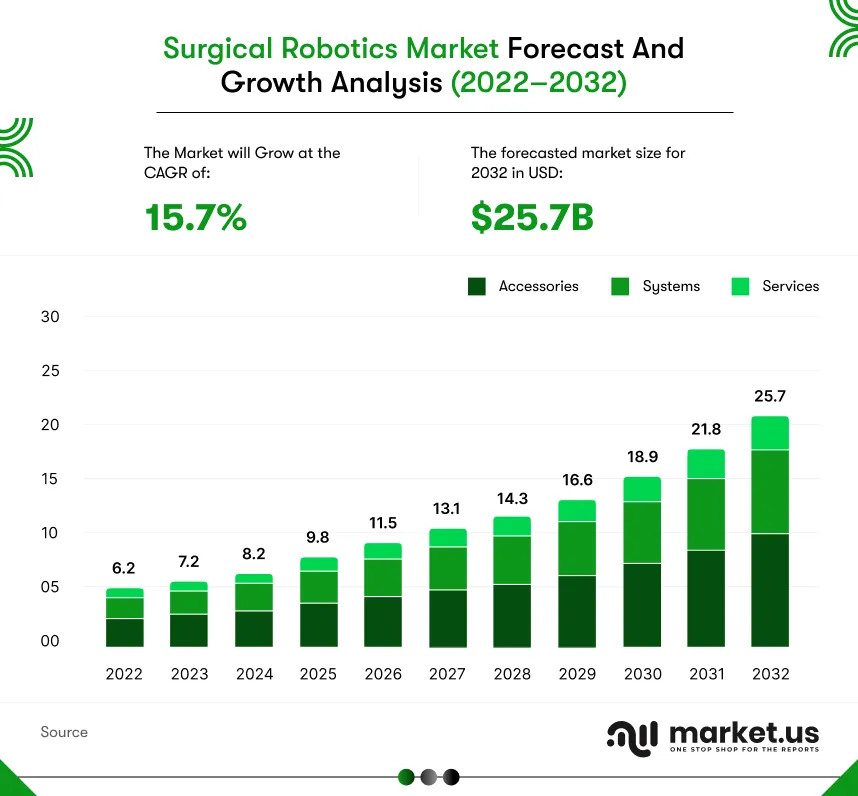
Healthcare leaders now face a clear inflection point where structured screening systems define long-term efficiency, coverage, and decision-making advantage.
Key Takeaways
- Screening programs fail at scale when diagnostics, workflows, and reporting operate as disconnected steps instead of one controlled system.
- Health camps expand access but fail to establish continuity, which prevents long-term tracking and reduces the value of collected data.
- A health screening robot introduces system-level execution that delivers consistent output, stable throughput, and reliable data across every location.
- Real-time, centralized data turns screening into an operational asset, enabling faster decisions, program-level control, and measurable outcomes.
- Organizations that adopt structured screening systems early gain control over scale and performance, while others remain limited by fragmented models that cannot sustain growth.
What are the key challenges in traditional health screening?
Traditional screening models struggle to support preventive health screening infrastructure because workflows remain fragmented, reporting stays manual, and execution depends heavily on short-term activities rather than structured systems across hospitals, diagnostic centers, and high-footfall environments.
Why do health camps fail to create continuous screening systems?
Health camps help expand reach quickly, but they fail to establish a system that supports continuous screening and long-term monitoring across populations.
- Health camps generate high screening volume within a limited time window.
- Screening data collected during camps rarely connects with future assessments.
- Follow-up depends on manual coordination, which reduces continuity over time.
- Organizations cannot track population health trends across repeated screening cycles.
Health camps increase access, but they do not create a system that sustains screening over time, which limits their effectiveness compared to a structured approach supported by a health screening robot.
How does fragmented diagnostics break the screening workflow?
Fragmented diagnostics divide screening into disconnected steps, where each test operates independently without forming a unified process.
- Different diagnostic devices operate without integration into a single workflow.
- Individuals move across stations, increasing turnaround time and coordination effort.
- Diagnostic data remains scattered instead of forming a complete health profile.
- Teams focus on managing processes rather than improving screening outcomes.
Fragmented diagnostics slow down operations and reduce outcome quality, which is why organizations move toward health screening robot that connect diagnostics within one structured workflow.
Why does manual reporting create operational and data risks?
Manual reporting depends on repeated human input, which introduces delays, increases error probability, and limits the ability to generate consistent outputs across environments.
- Data entry across multiple steps increases the chances of inconsistencies.
- Report generation takes longer due to validation and compilation requirements.
- Reporting formats vary across locations, reducing comparability and standardization.
- Decision makers do not get real-time access to structured and reliable data.
Manual reporting reduces reliability and slows decision-making, which is why many organizations adopt automated health screening systems to improve reporting speed and accuracy.
Why do traditional models struggle in high-footfall environments?
High-footfall environments require speed, consistency, and control, but traditional models rely heavily on manual coordination and disconnected processes.
- Screening workflows differ across locations, creating inconsistency in execution.
- Increased volume puts pressure on staff and reduces operational efficiency.
- Centralized visibility across facilities remains limited or unavailable.
- Scaling requires more manpower instead of improving system-level capability.
Traditional approaches cannot deliver consistent performance at scale, which is why organizations evaluate solutions such as a health screening robot or a digital health kiosk to improve control and standardization.
What is the core limitation of traditional screening systems?
Traditional screening approaches treat screening as an activity instead of a structured system, which limits scalability and long-term effectiveness.
- Screening remains episodic instead of continuous across populations and locations.
- Data lacks structure, reducing its value for long-term analysis.
- Operational inefficiencies increase cost without improving outcomes.
- Organizations cannot standardize or scale screening processes effectively.
Without a structured system, organizations struggle to build reliable preventive health screening infrastructure that supports continuity, visibility, and long-term efficiency.
These challenges combine to limit continuity, slow workflows, and reduce reliability, making it difficult to scale screening effectively. A health screening robot introduces connected workflows, standardized reporting, and system-level control to support preventive health screening infrastructure across high-footfall environments.
Traditional screening models increase effort without improving outcomes, which is why organizations that rely on manual coordination struggle to scale screening beyond limited environments. This gap is exactly where robotics in healthcare is reshaping the approach, enabling scalable, consistent, and efficient screening without increasing operational burden.

What are robotic health screening systems?
Robotic health screening systems bring diagnostics, workflow control, and reporting into one connected setup, allowing organizations to conduct preventive screening with consistency, speed, and centralized data visibility across multiple environments.
1. How does an automated screening workflow operate?
An automated workflow guides each screening step in sequence, removing dependency on manual coordination and ensuring consistent execution across environments where volume and accuracy both matter.
• Each individual follows a guided screening flow without requiring continuous staff supervision.
• The system maintains a predefined sequence to ensure consistent execution across locations.
• Data capture happens in real time during the screening process without manual input.
• Waiting time reduces as movement between separate stations is eliminated completely.
A structured workflow ensures screening remains consistent and reliable, which traditional setups fail to achieve at scale.
2. How does multi-device integration improve screening efficiency?
Multi-device integration connects diagnostics into one system, allowing multiple health parameters to be captured without breaking flow or creating coordination gaps.
• Different diagnostic devices operate within one system instead of isolated setups.
• Multiple health parameters are captured without requiring separate handling or coordination.
• Data from all devices merges into one unified record for each screened individual.
• Teams manage a single workflow instead of coordinating across multiple independent processes.
This model gives organizations direct control over execution, data visibility, and program scalability across every location.
3. How does digital reporting strengthen decision-making?
Digital reporting replaces manual compilation with real-time data processing, enabling faster and more reliable decision-making across screening programs.
• Reports are generated instantly without delays caused by manual validation processes.
• Standardized formats ensure consistency across locations and screening environments.
• Decision makers gain immediate access to structured and reliable screening data.
• Historical records support follow-ups and long-term monitoring across populations.
Such reporting capabilities define modern automated health screening systems and improve operational clarity.
4. What additional capabilities define robotic health screening systems?
Beyond diagnostics and reporting, these systems introduce control, scalability, and structured execution across environments that demand consistent screening performance.
• Guided interaction improves user experience and reduces dependency on trained staff.
• Centralized data systems provide visibility across multiple facilities and environments.
• Standardized workflows maintain consistency across different screening programs.
• Scalable architecture supports expansion without increasing operational complexity.
These capabilities position robotic health screening systems as a step beyond a standalone digital health kiosk, enabling structured preventive screening at scale.
Robotic health screening systems bring diagnostics, workflows, and reporting into one connected structure. This shift enables organizations to move toward a robotic health screening infrastructure, strengthening preventive health screening by delivering consistency, visibility, and scalable execution across high-footfall environments.
How does a health screening robot streamline the entire screening process?
A structured screening system works only when every stage connects without delay or data loss. A health screening robot manages registration, diagnostics, data capture, and reporting within one continuous workflow, allowing organizations to run screening with consistency, speed, and complete visibility across locations.
1. Patient registration
Registration establishes a single identity that anchors every test and report to one person throughout the screening journey.
• The system creates a unique record and links all readings to the same identity.
• Guided entry reduces intake errors and keeps fields consistent across sites.
• Central storage aligns records across branches and screening programs.
• Identity mapping prevents duplication during repeat visits and follow-up cycles.
A disciplined intake layer removes ambiguity before testing begins, which reduces downstream corrections, keeps records comparable across locations, and ensures that every result ties back to the right individual without reconciliation work.
2. Screening tests
Diagnostics run as a coordinated sequence where multiple checks occur within one environment instead of separate stations managed through handoffs.
• The system directs each person through a fixed sequence of required tests.
• Integrated devices capture vitals, cardiac, and other parameters in one setup.
• Minimal movement shortens turnaround time and improves throughput.
• The same sequence runs across sites, keeping outcomes comparable.
Coordinated testing eliminates station-to-station friction, reduces idle time between steps, and keeps the flow predictable, which is how robotic health screening systems maintain consistency when volume increases across multiple environments.
3. Automated data capture
Measurements move directly from devices into the system, which preserves accuracy and removes the need for repeated entry during high-volume operations.
• Device outputs enter the system automatically without transcription or duplication.
• Direct capture lowers mismatch risk when several tests run back-to-back.
• Results merge into one record, forming a complete profile for each person.
• Live data visibility helps teams monitor progress during active screening.
Accurate capture matters because reporting quality depends on input quality; eliminating manual handling prevents silent errors, shortens cycle time, and ensures that downstream analysis reflects what was actually measured.
4. Digital report generation
Captured data converts into a structured report that is ready for review and sharing immediately after screening completes.
• The system compiles results instantly into a standardized report format.
• Uniform templates keep outputs consistent across facilities and programs.
• Secure sharing enables quick review and timely follow-up actions.
• Historical reports remain accessible for trend tracking across repeat visits.
Immediate reporting closes the loop without backlog, which allows teams to act on results the same day, improves accountability across sites, and aligns with how automated health screening systems turn raw readings into usable decisions.
When intake, diagnostics, capture, and reporting operate as one flow, screening stops behaving like a series of tasks and starts functioning like a system. A health screening robot connects these stages so organizations gain predictable throughput, consistent data, and scalable operations that support long term preventive health screening infrastructure across high footfall environments, reflecting the growing role of robots in hospital environments where efficiency and consistency are critical.
What are the key benefits of robotic health screening systems for large-scale operations?
Organizations adopt robotic health screening systems when screening must handle higher volume, remain consistent across locations, and produce reliable data without increasing operational strain. A health screening robot shifts screening from coordinated effort to a controlled system that delivers measurable outcomes across hospitals, diagnostic centers, corporate environments, and industrial sites.
1. Faster screening that increases throughput without disrupting flow
Speed matters when screening demand rises, yet speed without structure creates errors and delays. A connected system improves throughput while keeping every step aligned.
• A health screening robot completes multiple tests within one continuous screening flow.
• Integrated diagnostics reduce idle time between steps and remove unnecessary movement.
• Guided sequences keep the process moving without repeated staff intervention.
• Reduced handoffs shorten the cycle time for each screened individual.
Higher throughput does not only improve efficiency; it allows organizations to expand daily screening capacity, reduce waiting queues, and maintain predictable operations even when volume fluctuates across locations.
2. Standardized workflows that keep execution consistent across locations
Variation across sites creates inconsistency in results, reporting, and user experience. A structured workflow ensures the same process runs everywhere without deviation.
• A single defined workflow executes uniformly across facilities and screening programs.
• Guided steps reduce dependency on individual staff decisions during screening.
• Uniform execution keeps outputs comparable across branches and environments.
• Centralized control maintains process discipline as operations scale.
Standardization builds reliability across programs, allowing leadership teams to trust outputs, compare performance across locations, and maintain quality without continuous supervision or correction.
3. Scalable screening programs that grow without increasing operational burden
Traditional scaling requires more staff, more coordination, and more time. A connected system enables expansion through process strength rather than added effort.
• Connected workflows support deployment across new sites without process redesign.
• System-driven execution reduces dependency on large operational teams.
• Expansion remains predictable because workflows stay controlled and repeatable.
• Central oversight maintains consistency across distributed environments.
Scalability becomes sustainable when systems carry operational load, which is where automated health screening systems provide long-term advantage over manual, resource-heavy models.
4. Digital health records that improve visibility, continuity, and decision-making
Screening creates value only when data remains accessible, structured, and usable across time and locations. Digital records turn screening output into a continuous data layer.
• All results are stored within a centralized system as structured, searchable records.
• Real-time access enables faster review, follow-up, and intervention planning.
• Historical data supports trend analysis across repeat screenings and populations.
• Standardized formats maintain consistency across facilities and reporting cycles.
Accessible data strengthens decision-making and allows organizations to build preventive health screening infrastructure that supports long-term monitoring, program evaluation, and population-level insights.
The benefits extend beyond operational efficiency. A health screening robot brings speed, consistency, scalability, and data visibility into one connected system, allowing organizations to move from effort driven screening to a structured model that delivers measurable outcomes across every location and program. This shift becomes even clearer when looking at health lounge vs health screening robot, where the difference in scalability, consistency, and measurable impact is evident.
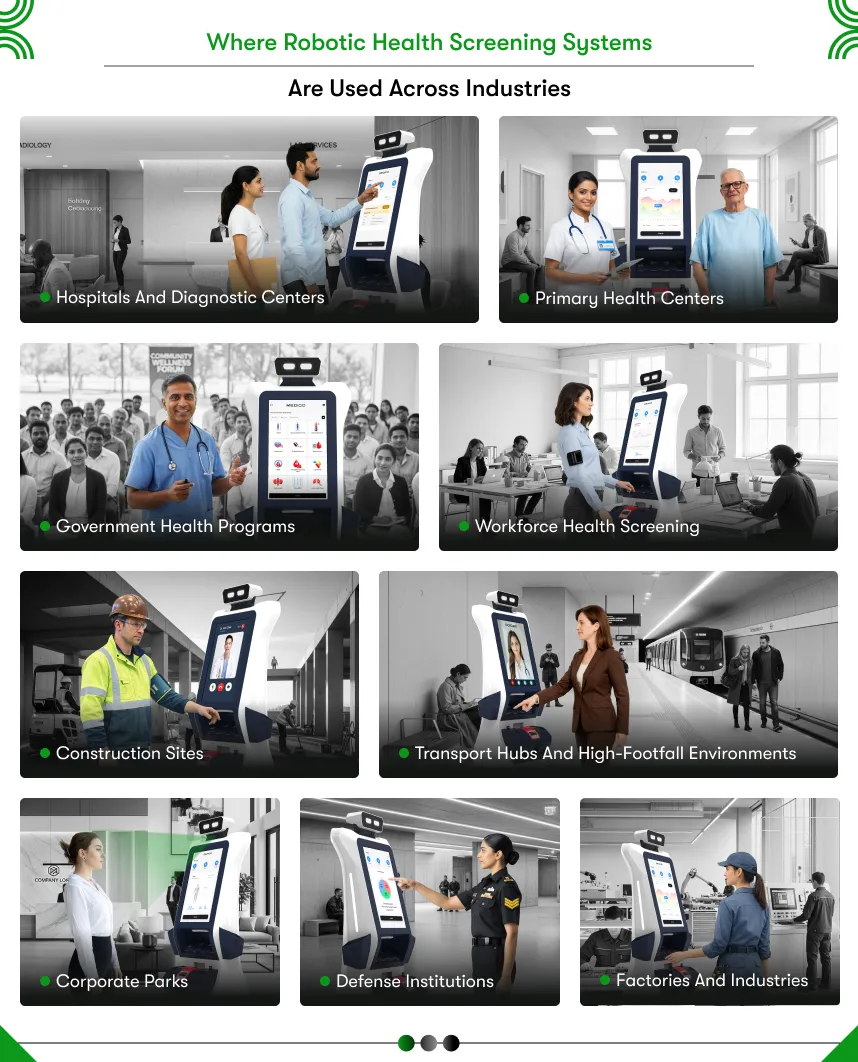
Where do robotic health screening systems create the highest impact across industries?
Healthcare and workforce environments require structured screening that can handle volume, maintain consistency, and deliver usable data. Robotic health screening systems support these needs by running connected workflows that bring diagnostics, reporting, and visibility into one operational model across multiple environments.

1. Hospitals and diagnostic centers
Hospitals and diagnostic networks require faster intake, consistent screening quality, and clear data visibility across departments and locations.
• A health screening robot streamlines pre-check and triage processes before consultation.
• Integrated diagnostics reduce delays caused by multiple disconnected screening steps.
• Standardized workflows ensure uniform screening across departments and facilities.
• Centralized data supports faster clinical decisions and operational planning.
Hospitals gain operational control when screening follows a defined system that maintains speed, consistency, and data accuracy across every patient interaction.
2. Primary Health Centers and large-scale screening programs
Distributed screening environments require a consistent process that works across locations with varying levels of infrastructure and staffing.
• A structured workflow ensures identical screening execution across all centers.
• Guided interaction reduces dependency on highly specialized staff at each location.
• Centralized reporting enables monitoring across large screening programs.
• Scalable systems support expansion without compromising consistency or data quality.
Such environments benefit from preventive health screening infrastructure that maintains continuity, visibility, and program-level control across distributed populations.
3. Government health programs
Large public screening initiatives require a structured model that supports high-volume execution, uniform delivery, and centralized visibility across districts, regions, and screening campaigns.
• A health screening robot supports consistent screening delivery across multiple public health locations.
• Guided workflows help maintain uniform execution across teams, centers, and outreach programs.
• Centralized records improve monitoring, reporting, and program-level performance visibility.
• Digital reporting supports faster review, follow-up planning, and long-term health tracking.
Government health programs gain stronger operational control when screening runs through a connected system that supports reach, standardization, and measurable outcomes across large populations.
4. Workforce screening in corporate parks and industrial environments
Organizations require periodic screening programs that operate efficiently without disrupting productivity or daily operations.
• A health screening robot enables high-volume screening within limited operational windows.
• Integrated workflows reduce employee downtime during screening activities.
• Digital records support compliance, audits, and long-term workforce health tracking.
• Consistent processes ensure uniform standards across multiple facilities.
Workforce programs become more effective when screening operates as a structured system instead of a manually coordinated activity.
5. Factories, construction sites, and high-risk industrial environments
Industrial environments require regular health screening to support safety standards and maintain workforce readiness across projects and locations.
• Screening workflows run consistently across sites without process variation.
• Faster execution allows large workforce groups to be screened within tight schedules.
• Centralized data supports safety audits and regulatory compliance tracking.
• Early health insights help maintain workforce readiness and operational continuity.
Industries benefit when screening integrates into operations through connected systems rather than separate activities.
6. Transport hubs, corporate campuses, and high-footfall environments
High-footfall locations require screening systems that can manage large volumes while maintaining consistency and user experience.
• High-throughput capability supports screening of large populations within short timeframes.
• Guided interaction reduces dependency on staff for managing flow and coordination.
• Standardized workflows maintain consistency across different screening points.
• Real-time data visibility supports operational planning and resource allocation.
Such environments require systems that maintain flow and control even as volume increases throughout the day.
7. Defense institutions and controlled operational environments
Defense environments require structured screening systems that operate with discipline, consistency, and centralized oversight.
• Standardized workflows ensure uniform screening across units and locations.
• Centralized data supports monitoring and reporting at an organizational level.
• Scalable systems allow deployment across multiple operational environments.
• Reliable execution supports long-term health monitoring and readiness planning.
These environments benefit from automated health screening systems that maintain control, consistency, and reliability across operations.
Across industries, screening requires speed, consistency, and visibility. A health screening robot brings these capabilities into one system, allowing organizations to run structured screening programs that support scale, operational control, and long-term preventive healthcare outcomes.
Now, let’s understand this with a real-world example of health screening robot Medigo.
How Medigo delivers structured health screening in real-world environments
Real-world screening demands consistency, speed, and reliable data across environments where volume remains high and operations cannot slow down. Medigo operates as a health screening robot that connects diagnostics, workflow, intelligence, and reporting into one controlled system, allowing organizations to run preventive screening programs with clarity, continuity, and measurable performance.
1. Guided screening flow that removes dependency on manual coordination
Medigo structures the entire screening journey through a guided interface that ensures each individual completes every step in the correct sequence.
• The system guides individuals through each stage without requiring constant staff involvement.
• A predefined flow ensures that no screening step is skipped or repeated.
• The interaction supports multiple languages, making screening accessible across diverse populations.
• The same guided process runs across locations, maintaining consistency in execution.
A guided workflow creates discipline in screening execution and reduces reliance on manual supervision across different environments.
2. Integrated diagnostics that screen 65+ health conditions in one flow
Medigo combines multiple diagnostic functions into one connected workflow, allowing screening to capture a wide range of health indicators without fragmentation.
• The system supports screening for 65+ health conditions within one structured process.
• Integrated devices capture multiple parameters without requiring separate stations.
• Each diagnostic step connects directly to the next without coordination delays.
• All readings combine into one unified health record for each individual.
This integrated workflow allows comprehensive screening without increasing operational complexity or time per individual.
3. AI intelligence layer that delivers high-accuracy interpretation
Medigo includes an AI Intelligence Layer that interprets screening data and guides clinical pathways based on structured inputs and validated datasets.
• Multilingual conversational AI understands patient-described symptoms in native languages.
• An adaptive protocol engine prioritizes tests using responses and captured readings.
• Clinical-grade interpretation delivers results with up to 95% screening accuracy.
• Post-result analysis converts outputs into clear insights with recommended next steps.
• Telemedicine integration enables real-time consultation and digital prescription support.
This intelligence layer ensures that screening produces meaningful, actionable outcomes instead of raw data.
4. Real-time data capture with reports generated in minutes
Medigo captures and processes data during screening, ensuring results remain accurate and immediately available for use.
• Device readings are recorded directly into the system without manual transcription.
• Reports generate within approximately 3 minutes after screening completion.
• Standardized formats maintain consistency across locations and programs.
• Digital records remain accessible for sharing, follow-up, and long-term tracking.
Fast reporting allows teams to act on results immediately while maintaining reliable and structured records.
5. Continuous screening for long-term preventive health programs
Medigo supports ongoing screening programs that require repeat execution, structured workflows, and long-term visibility.
• Screening processes remain consistent across repeated cycles and multiple locations.
• Centralized records support longitudinal tracking across individuals and populations.
• Real-time visibility improves planning and program-level decision-making.
• Structured execution supports long-term preventive healthcare initiatives.
Continuous execution allows organizations to build reliable screening programs instead of isolated activities.
Medigo operates as a connected system where workflow, diagnostics, AI intelligence, and reporting function together without interruption. With support for 65+ conditions, high-accuracy screening, and reports generated within minutes, Medigo enables organizations to run structured screening programs that deliver consistency, speed, and reliable outcomes across real-world environments.
What will preventive healthcare infrastructure look like in the next decade?
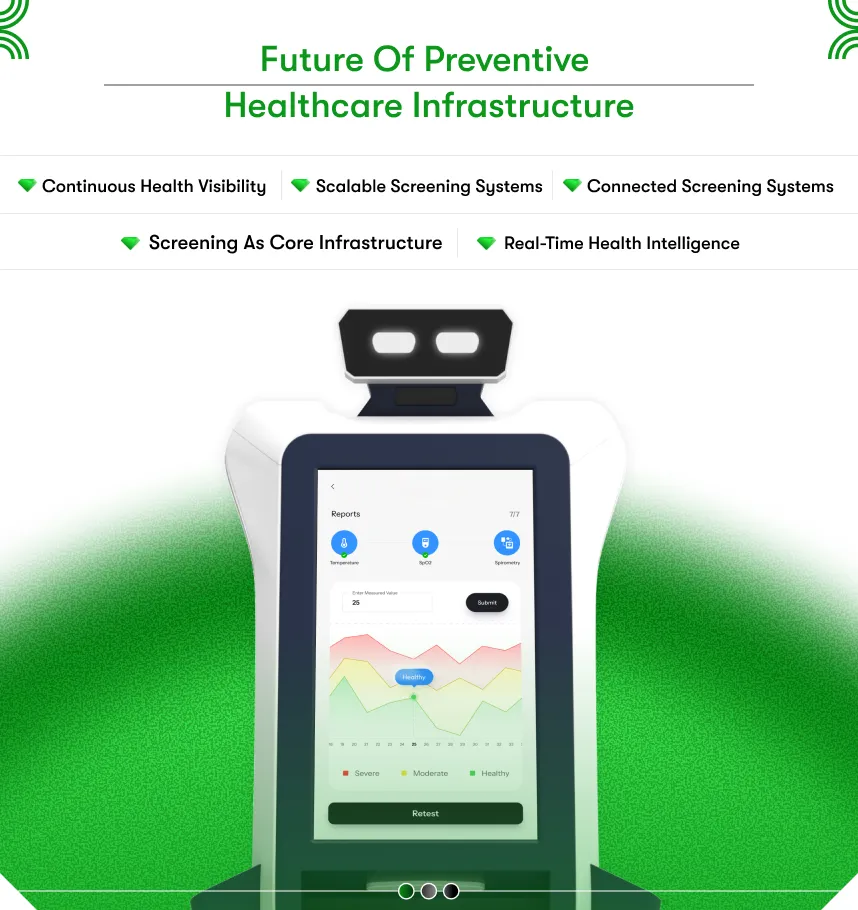
Preventive healthcare is moving toward always-on systems where screening, data, and follow-up remain connected across time, locations, and populations. A health screening robot becomes part of that foundation, enabling continuous visibility into health status instead of isolated screening events that fade after execution.

1. Continuous health visibility across populations
Healthcare systems are moving toward persistent monitoring where health data builds over time instead of resetting after each screening interaction.
• Screening evolves into repeatable checkpoints that track health across multiple time intervals.
• Individuals build longitudinal health records that reflect changes, not snapshots.
• Organizations monitor population-level trends instead of isolated screening outputs.
• Early risk detection becomes embedded within routine operational workflows.
This shift enables healthcare systems to identify patterns early and respond before conditions escalate, which defines the future of preventive care.
2. Screening as an embedded infrastructure layer
Screening will operate as a built-in layer across environments rather than a separate activity triggered occasionally.
• Hospitals, workplaces, and public environments integrate screening into daily operations.
• Screening systems connect with broader healthcare workflows and digital ecosystems.
• Data flows across systems, enabling continuity between screening and clinical decisions.
• Infrastructure supports consistent execution across distributed locations and populations.
Such integration positions robotic health screening systems as a core layer within healthcare delivery, not an external add-on.
3. Real-time health intelligence driving decisions
Healthcare decisions will rely on continuous data streams instead of delayed reports generated after isolated screening events.
• Health data becomes instantly available for analysis and follow-up planning.
• Decision makers track trends across populations, locations, and timeframes.
• Systems support proactive intervention instead of reactive response.
• Data-driven insights guide resource allocation and program design.
Real-time intelligence strengthens how automated health screening systems contribute to operational and clinical decisions across healthcare ecosystems.
4. Scalable systems supporting population-level screening
Future infrastructure will support large-scale screening without increasing operational complexity or dependency on manual coordination.
• Screening expands across regions without disrupting workflow consistency.
• Standardized systems maintain uniform execution across diverse environments.
• Centralized control enables monitoring and optimization of large-scale programs.
• System-driven execution reduces reliance on manpower-heavy coordination.
Scalability becomes achievable when screening operates as structured preventive health screening infrastructure rather than fragmented activity.
5. Medigo as a real-world step toward future-ready infrastructure
Future infrastructure is not theoretical. Systems already exist that reflect how connected screening will operate at scale.
• Medigo runs integrated screening workflows across hospitals, workplaces, and public environments.
• The system captures multiple health parameters and generates structured reports within minutes.
• Centralized data enables continuous monitoring and long-term health tracking.
• Scalable deployment supports expansion without disrupting operational flow.
Medigo demonstrates how a health screening robot already aligns with the direction healthcare infrastructure is moving toward, where screening becomes continuous, connected, and data-driven.
The future of healthcare infrastructure will depend on systems that maintain continuity, visibility, and scalability across populations. A health screening robot supports this shift by enabling connected screening environments where data, diagnostics, and workflows operate together, allowing organizations to move from episodic care to structured preventive healthcare at scale.
Conclusion
Preventive healthcare demands systems that deliver speed, consistency, and reliable data across every screening environment. Disconnected processes create delays, reduce visibility, and limit the value of screening programs over time. A connected model brings diagnostics, workflows, and reporting into one controlled system, allowing organizations to run screening with accuracy and continuity.
A health screening robot enables higher throughput, standardized execution, and real-time access to structured data that supports informed decisions and long-term monitoring. Screening becomes a dependable capability that supports ongoing preventive care across locations.
If your organization plans to expand screening across hospitals, workforce environments, or large-scale operations, the next step is to adopt a system designed for scale and control.
Explore Medigo to understand how a connected screening system can help you build a reliable preventive healthcare infrastructure and improve screening outcomes across every deployment.